Restaurant Insurance Built for How NYC Hospitality
Actually Operates
We work with NYC restaurants and hospitality operators who need coverage built around their actual operation — not a generic package.
Coverage Built for the Real Risk of Running a Restaurant in New York
Most restaurant owners don't find out their policy has gaps until they file a claim. By then, the question isn't what coverage costs — it's what the gap costs. KJE structures restaurant insurance NYC operators can rely on by starting with your actual operation: your license type, your service hours, your physical space, your staff, and your revenue. Every coverage decision follows from that conversation.
Restaurant Insurance Coverage We Place
General Liability
Slip-and-fall claims, third-party bodily injury, property damage, and product liability are the baseline exposure for any food and beverage operation. General liability coverage is structured against your actual foot traffic, service profile, and physical layout — not a flat package designed for a business a fraction of your size. For high-volume restaurants in Manhattan, Brooklyn, or Queens, limits need to reflect the reality of a busy dining room, not a quiet retail shop.
Liquor Liability Insurance
If you hold a New York State Liquor Authority license, liquor liability isn't optional — it's the coverage that stands between an incident at your bar and a claim that threatens your entire operation. KJE reviews liquor liability as a core component of every restaurant engagement, with limits sized to your license type, service hours, and the profile of your operation. We explain what you have, what it covers, and where the gaps are — before something happens.
Business Interruption Insurance
Your rent doesn't stop because your kitchen does. If a fire, a flood, or an equipment failure forces you to close for two weeks, business interruption coverage keeps your fixed costs covered while you get back on your feet. KJE sizes business interruption limits against your actual rent, payroll, and revenue — not a default figure that leaves you short when you need it most.
Commercial Property Insurance
Your equipment, your build-out, your inventory, your furniture — everything inside your four walls has replacement value that a basic policy may significantly undercount. Commercial property coverage for restaurants accounts for the true cost of your space: commercial kitchen equipment, custom build-outs, refrigeration, and contents that a standard property policy wasn't written to cover.
Workers' Compensation
New York State requires workers' compensation for virtually every employer, and restaurants — with their combination of kitchen hazards, late hours, and high staff turnover — carry above-average exposure in this category. Coverage is structured to meet state requirements and to reflect the operational realities of your workforce.
Employment Practices Liability
Wrongful termination, harassment, and discrimination claims are an increasing exposure for hospitality businesses with large, diverse staff populations. EPLI coverage is placed as an adjacent line for restaurant clients who need it — and most do.
What Makes NYC Restaurant Risk Different From Everywhere Else
Running a restaurant in New York City carries a specific set of exposures that operators in other markets don't face at the same scale or frequency.
Department of Health inspections — A failed inspection can force a temporary closure. Business interruption coverage should account for this scenario, not just fire and flood.
New York State Liquor Authority licensing — ABC license holders carry distinct liability exposure tied to service hours, license type, and compliance history. Liquor liability limits need to reflect that.
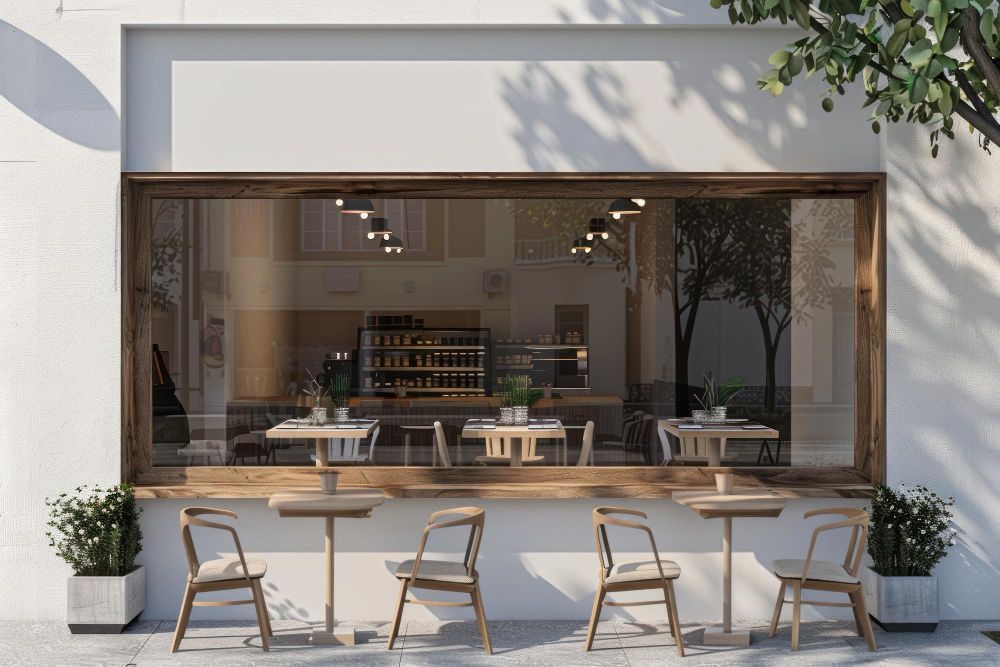
Sidewalk café and outdoor dining — Operators with sidewalk permits carry additional premises liability exposure that requires explicit coverage, not an assumption that the base policy extends outdoors.
Third-party delivery platforms — If your restaurant uses third-party delivery services, the liability picture for off-premises incidents is more complicated than most standard policies address.
High-density neighborhoods — A West Village dining room at capacity on a Saturday night carries different general liability exposure than a suburban restaurant doing the same volume. Manhattan, Brooklyn, and Queens operators need coverage sized for their actual environment.
Neighborhoods and Boroughs We Serve
KJE places restaurant insurance for operators across New York City and the broader metro. Our commercial clients include restaurants, bars, and hospitality businesses in Manhattan — including the West Village, SoHo, Tribeca, the Upper East Side, Midtown, and Chelsea — as well as operators in Brooklyn and Queens. We also work with hospitality businesses across Long Island and Westchester County.
If you were referred to KJE by another operator or an industry contact, you're in the right place. Call or text 212-786-2018.
Frequently Asked Questions
What insurance does a restaurant in New York need?
At minimum, a New York restaurant needs general liability, liquor liability (if you hold an ABC license), commercial property, business interruption, and workers' compensation. Depending on your operation, you may also need EPLI, umbrella coverage, and additional endorsements for sidewalk dining or delivery exposure. The right starting point is a conversation about how your restaurant actually operates.
How much does restaurant insurance cost in NYC?
Restaurant insurance premiums vary significantly based on revenue, square footage, service hours, liquor sales as a percentage of total sales, and claims history. A broker who places coverage based on your actual profile will consistently find better terms than one applying a standard package. We don't quote a number without understanding your operation first.
What is liquor liability insurance and do I need it?
Liquor liability covers your business against claims arising from alcohol service — if a guest is over-served and causes harm to themselves or a third party, your operation can be named in the resulting claim. In New York, any business holding an ABC license should carry liquor liability as a standalone line, separate from general liability. The limits should reflect your service hours and the volume of your alcohol sales.
What does a restaurant insurance broker in Manhattan do differently?
A broker who specializes in hospitality insurance understands the specific exposures of a New York restaurant — DOH inspections, ABC licensing implications, sidewalk café permits, high-density premises liability — and structures coverage around them. A generalist broker applies a standard package. The difference shows up when you file a claim.
Does business interruption insurance cover a restaurant forced to close by the health department?
It depends on the specific policy language and the trigger for closure. Some business interruption policies cover government-ordered closures; others require direct physical damage as a trigger. This is exactly the kind of policy detail KJE reviews explicitly with restaurant clients — because an assumption here is the kind of gap that costs you the most at the worst time.
Talk to a Broker Who Knows the Restaurant Business
KJE works with restaurant and hospitality operators across New York City, Long Island, and Westchester. If you're opening a new location, switching brokers, or simply not sure whether your current coverage holds up, the conversation starts with a call or a text.
